

Building your dream barndominium starts with one question: What will this actually cost me?
You’re not alone in wanting transparency about the barndominium cost breakdown before you break ground. Too many builders give vague estimates that balloon into budget nightmares. This guide breaks down every dollar you’ll spend, from site prep to final walkthrough.
Most homeowners receive incomplete cost estimates that miss critical expenses. Understanding the complete financial picture helps you make informed decisions about your project. For the complete barndominium construction process from start to finish, including permits and timelines, check out our comprehensive guide to building a barndominium in Georgia. By the end of this article, you’ll know exactly where every dollar goes and why each expense matters for your project.
What drives barndominium cost in Georgia?
The biggest cost drivers are site prep, foundation requirements, shell choice, interior finish level, utilities, and local permitting. The land can move the number fast. A simple build on a prepared site is one thing. A rural property that needs grading, septic, drainage, and power extension is another.
Pre-Construction Foundation Costs
Your barndominium investment begins before any construction starts. These upfront costs set the stage for everything that follows and often catch homeowners off guard because they’re not visible in the final structure.
Site Preparation Investment
Site assessment and soil testing run $2,000 to $5,000 for most properties. Georgia’s clay soil requires special attention because it expands when wet and contracts when dry, creating movement that damages foundations and structures. Professional soil engineers perform bearing capacity tests, percolation tests for septic systems, and expansion potential analysis. Poor soil conditions mean additional foundation work, driving costs higher by $10,000 to $25,000 for soil stabilization or deeper foundations.
Soil testing also determines proper foundation design for your specific conditions. Engineers provide written recommendations for footing depth, reinforcement requirements, and drainage systems. These recommendations become part of your construction documents and may be required for building permit approval.
Excavation and grading depends on your lot’s topography and existing vegetation. Flat lots with minimal trees need basic grading at $2 to $4 per square foot. Sloped lots require extensive cut-and-fill work, pushing costs to $8 to $12 per square foot. Tree removal varies from $200 to $500 for small trees to $1,000 to $3,000 for large hardwoods over 50 feet.
Georgia’s red clay becomes cement-hard when dry and sticky mud when wet. Experienced contractors time excavation work carefully to avoid these problems. Proper drainage systems cost $3,000 to $8,000 but prevent costly water damage. French drains, surface swales, and culverts direct water away from structures. Rock excavation adds $15 to $25 per cubic yard if granite outcroppings are encountered.
Utility connections create major cost variations between rural and urban sites. Rural properties face higher costs: electrical hookups ($5,000 to $15,000), well drilling ($8,000 to $15,000), and septic systems ($8,000 to $20,000). Three-phase power for workshop equipment adds $3,000 to $8,000. Well water systems require pressure tanks, treatment systems, and regular testing. City connections cost less but require impact fees ranging from $2,000 to $8,000 each for water and sewer taps.
Foundation Systems
Concrete slab foundations cost $6 to $12 per square foot installed, including excavation, gravel base, vapor barrier, and finishing. A 2,400-square-foot barndominium needs $14,400 to $28,800 for the slab. Plumbing rough-in adds $3,000 to $6,000. Electrical conduit and grounding systems add $1,500 to $3,000. Radiant floor heating increases costs by $8 to $15 per square foot but provides efficient heating for open spaces.
Slab preparation requires compacted gravel base, vapor barriers, and reinforcement with rebar or wire mesh. Edge thickening provides extra strength where posts attach. Thicker slabs for heavy equipment storage cost $15 to $20 per square foot but prevent cracking under concentrated loads.
Pier and beam alternatives work better for sloped lots or problem soils but cost 20% to 30% more than slabs. Benefits include easier utility access, better drainage, and insulated crawl spaces. Concrete piers cost $200 to $500 each, with most barndominiums needing 15 to 25 piers. Steel beam systems cost $8 to $15 per linear foot.
Weather delays extend concrete curing times in Georgia’s humid climate. Rain delays concrete pours and affects quality. Contractors monitor weather forecasts and may postpone work when storms threaten. Budget 10% to 15% extra for weather-related delays and extended curing requirements.
If you are trying to understand what your own project might cost, the next useful step is not another generic range. It is a real estimate tied to your land, your size target, and your finish level.
Barndominium vs custom home: which path fits better?
A custom barndominium usually fits buyers who want open spans, a simpler shell, workshop or storage flexibility, and a more rural feel. A standard custom home usually fits buyers who want a more traditional exterior, subdivision compatibility, or a room layout that does not depend on wide-open structural spans. The right answer depends on how you want to live, what your land allows, and how the budget needs to be staged.
- Fixed-price quotations help reduce surprise costs later
- Planning-phase selections create a cleaner budget before work starts
- CoConstruct gives clients visibility into changes, allowances, and decisions
WANT AN INSTANT ONLINE ESTIMATE?
Structural Shell and Framework Investment
Your barndominium’s structural system determines both initial cost and long-term performance. Quality materials cost more upfront but provide decades of trouble-free service.
Post-Frame Structure
Engineered lumber versus steel posts presents your first major structural decision. Treated lumber posts cost $8 to $15 per linear foot. Southern yellow pine treated with copper preservatives resists insects and moisture for 20 to 30 years. Laminated veneer lumber (LVL) costs 30% more but provides superior strength and dimensional stability.
Steel posts run $20 to $35 per linear foot but offer superior strength, durability, and fire resistance. Steel allows wider spans and higher load capacity for workshop areas. Galvanized steel resists corrosion for 50+ years with minimal maintenance. Steel framing allows future modifications more easily than lumber construction.
Concrete footings and anchor systems transfer loads safely to the ground and secure posts against wind uplift. Footings cost $150 to $300 each depending on size and reinforcement. Most barndominiums need 12 to 20 footings. Footing size depends on soil bearing capacity and post loads. Depth must extend below frost lines and root zones of large trees.
Roof truss engineering and installation accounts for 15% to 20% of structural costs. Custom barndominium pricing includes engineered trusses designed for your specific loads and spans. Pre-engineered trusses cost $3 to $8 per square foot. Custom trusses for complex designs cost $8 to $15 per square foot. Truss installation requires crane service costing $1,000 to $2,500 per day.
Exterior Envelope
Metal roofing materials and labor run $8 to $15 per square foot for standing seam systems providing 50+ year service life. Standing seam roofs use concealed fasteners that eliminate leak points. Premium systems cost $15 to $25 per square foot and include enhanced weather resistance. Corrugated metal costs less ($5 to $10 per square foot) but has shorter service life and higher maintenance.
Roof insulation adds $2 to $6 per square foot. Reflective barriers reduce heat gain in Georgia’s climate. Continuous insulation eliminates thermal bridges. Proper ventilation prevents moisture buildup that reduces effectiveness.
Wall sheathing and moisture barriers protect against Georgia’s humidity and storms. OSB sheathing costs $1.50 to $2.50 per square foot and provides adequate performance. Plywood costs 20% more but offers superior moisture resistance. House wrap barriers cost $0.50 to $1.00 per square foot and prevent water infiltration while allowing vapor transmission.
Overhead doors and entry systems define barndominium character. Basic residential doors cost $800 to $1,500 each. Commercial-grade workshop doors run $2,000 to $4,000 each but handle heavy use better. Large doors for equipment access cost $5,000 to $10,000 including special framing. Automatic operators add $200 to $1,200 per door depending on features.
Interior Systems and Infrastructure
Mechanical systems require substantial investment but determine comfort, efficiency, and functionality for decades.
Mechanical Systems
Electrical rough-in and panel requirements cost $5 to $8 per square foot for basic wiring. Barndominiums need larger services because they combine residential and workshop loads. 200-amp services cost $2,000 to $4,000 and handle most residential needs. Workshop areas with heavy equipment require 400-amp services costing $4,000 to $8,000. Three-phase power adds $2,000 to $5,000.
Circuit planning requires consideration of current and future needs. Workshop areas need multiple 240-volt circuits. Living areas require adequate lighting and outlet circuits. Exterior circuits support security and vehicle needs. Generator transfer switches allow backup power during outages.
Plumbing systems run $8,000 to $15,000 for basic layouts. Long pipe runs between fixtures increase costs and reduce pressure. PEX piping costs less than copper and installs faster in long runs. Copper costs 40% more but provides superior durability. Well water systems require pressure tanks ($300 to $800), treatment systems, and regular testing.
Water distribution requires pressure management in large barndominiums. Pressure-reducing valves prevent fixture damage. Expansion tanks accommodate thermal expansion. Recirculation pumps provide instant hot water while reducing waste.
HVAC sizing for open-concept spaces requires careful calculation because traditional methods don’t account for high ceilings and open plans. Heat pump systems work well in Georgia’s climate and cost $6,000 to $12,000 installed. Ground-source heat pumps cost $15,000 to $25,000 but provide superior efficiency.
Ductwork design affects performance and costs. Properly sized ducts deliver adequate airflow without noise. Zoning systems allow different temperature control for living versus workshop areas. Basic zoning adds $2,000 to $5,000 but provides significant comfort benefits.
Insulation and Climate Control
Georgia climate zone requirements (Zone 3A) mandate R-13 walls and R-30 attics minimum. Upgrading to R-15 walls and R-38 attics improves comfort with modest additional investment. Wall insulation costs $2.50 to $4.00 per square foot for fiberglass batts.
Spray foam versus batt insulation presents significant trade-offs. Spray foam costs twice as much but provides superior air sealing and moisture control. Open-cell spray foam costs $1.50 to $3.00 per square foot and provides R-3.5 per inch. Closed-cell costs $2.50 to $4.50 per square foot but provides R-6 per inch plus vapor barrier properties.
Energy efficiency ROI calculations show insulation upgrades typically pay back within 8 to 12 years. Proper insulation reduces HVAC system size requirements, saving equipment costs. Air sealing costs $1,500 to $3,000 but can reduce energy bills by 15% to 25%.
Interior Finishes and Customization
Interior finishes determine daily livability and represent significant project costs. Smart selections balance aesthetics, durability, and maintenance requirements.
Essential Finishes
Flooring options range from utilitarian to luxury. Polished concrete costs $3 to $8 per square foot and complements barndominium aesthetics while providing exceptional durability. Acid staining adds color for $1 to $3 per square foot additional. Luxury vinyl plank costs $4 to $8 per square foot with superior moisture resistance. Engineered hardwood costs $8 to $15 per square foot and adds significant resale value.
Drywall installation and finishing costs $2.50 to $4.00 per square foot. High ceilings increase labor costs due to scaffolding requirements. Interior paint costs $1.50 to $3.00 per square foot including primer and two finish coats. Premium paints provide better durability and low-VOC formulations.
Basic versus premium fixture allowances create significant budget differences. Basic bathroom packages cost $3,000 to $5,000 each and provide adequate function. Premium packages cost $8,000 to $15,000 but offer superior performance, appearance, and longevity.
Kitchen and Bath Investments
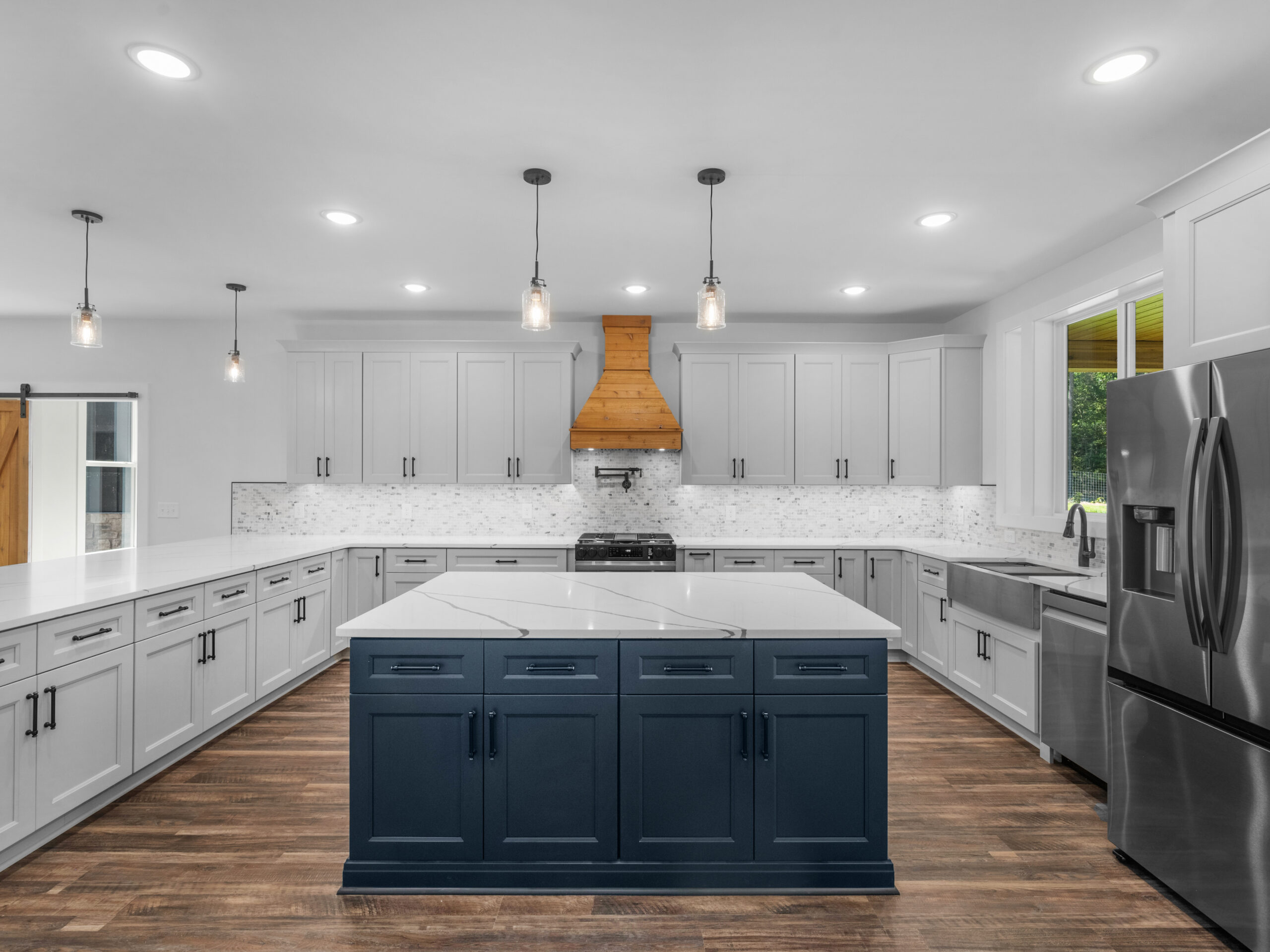
Appliance packages vary dramatically based on performance expectations. Cost to build a barndominium per square foot includes allowances of $50 to $150 per square foot of kitchen area. Basic packages cost $8,000 to $15,000. Mid-range appliances cost $15,000 to $30,000 with better efficiency and features. Professional-grade appliances cost $30,000 to $60,000+ but provide commercial performance.
Cabinetry options significantly affect functionality and costs. Stock cabinets cost $100 to $200 per linear foot with limited options. Semi-custom cabinets cost $200 to $400 per linear foot with expanded choices. Custom cabinetry costs $400 to $800 per linear foot but provides unlimited design flexibility and perfect fit.
Counter-tops affect appearance and maintenance. Laminate costs $15 to $40 per square foot. Granite costs $50 to $120 per square foot with natural beauty and excellent durability. Quartz costs $60 to $150 per square foot but offers consistent appearance without sealing requirements.
Plumbing fixture quality tiers affect longevity and satisfaction. Basic fixtures last 10 to 15 years with adequate function. Mid-grade fixtures provide 20 to 25 years of service with better materials. Premium fixtures offer lifetime warranties and superior performance through precision manufacturing.
Project Management and Soft Costs
Professional services and management costs are essential for successful completion but often surprise homeowners because they’re not visible in the finished structure.
Professional Services
Architectural and engineering fees consume 8% to 15% of construction costs depending on complexity. Basic plans cost $3,000 to $8,000. Custom designs requiring extensive engineering cost $15,000 to $40,000. Structural engineering ensures code compliance and safe load handling, costing $2,000 to $8,000.
Surveying establishes boundaries and building locations. Boundary surveys cost $500 to $1,500. Construction staking costs $800 to $2,000. Soil engineers provide foundation recommendations costing $1,500 to $4,000 but prevent expensive foundation problems.
Building permits and inspection requirements typically cost $2,000 to $5,000. Permit fees calculate based on construction value or square footage. Plan review covers code compliance examination. Multiple inspections ensure work meets standards, costing $100 to $300 each.
Insurance during construction protects your investment. Builder’s risk insurance costs 1% to 2% of construction value annually. This coverage bridges construction start to final homeowner’s insurance. Verify contractor liability and workers’ compensation coverage before starting work.
Contingency and Timeline Factors
Material price volatility significantly affects budgets because barndominiums use substantial steel and lumber. Prices fluctuate based on global supply chains and weather events. Smart builders lock prices early or include escalation clauses. Budget 10% to 15% extra for price increases on long projects.
Weather delays and seasonal considerations impact schedules and costs. Spring rains delay site work. Summer heat slows exterior work. Fall provides optimal weather. Winter storms halt work completely. Seasonal planning minimizes weather impacts.
Change order management prevents budget overruns. Barndominium construction budget planning should include 10% to 15% contingency for modifications. Common changes include outlet additions, fixture upgrades, and material substitutions costing $100 to $25,000+ each. Document all changes in writing before work proceeds.

Investment Analysis: Sample Barndominium Budgets
Real-world examples help you understand actual costs for different styles and finish levels using current Georgia construction costs.
Basic Barndominium (2,000 Square Feet)
Shell and structure costs (35% of budget):
- Site preparation and utilities: $25,000 to $45,000
- Foundation system: $18,000 to $30,000
- Structural framing and roofing: $35,000 to $55,000
- Exterior envelope: $25,000 to $40,000
- Subtotal: $103,000 to $170,000
Interior systems (25% of budget):
- Electrical, plumbing, HVAC: $30,000 to $53,000
- Insulation and interior framing: $10,000 to $20,000
- Subtotal: $40,000 to $73,000
Finishes and fixtures (30% of budget):
- Flooring and wall finishes: $14,000 to $31,000
- Kitchen and bathrooms: $23,000 to $53,000
- Subtotal: $37,000 to $84,000
Soft costs and contingency (10% of budget):
- Professional services and permits: $12,000 to $20,000
- Insurance, financing, contingency: $17,000 to $34,000
- Subtotal: $29,000 to $54,000
Total basic barndominium: $209,000 to $381,000
Cost per square foot: $105 to $190
Custom Barndominium (3,000 Square Feet)
Premium material upgrades increase costs significantly:
- Steel frame construction: adds $25,000 to $40,000
- Standing seam roofing: adds $12,000 to $20,000
- Spray foam insulation: adds $15,000 to $25,000
- Geothermal HVAC: adds $15,000 to $25,000
Luxury finish additions:
- Hardwood flooring throughout: $25,000 to $40,000
- Custom cabinetry and millwork: $40,000 to $75,000
- Professional appliances: $25,000 to $45,000
- Luxury bathroom features: $35,000 to $65,000
Workshop enhancements:
- Overhead crane system: $8,000 to $15,000
- Compressed air and specialty electrical: $8,000 to $16,000
- Epoxy floors and storage systems: $9,000 to $20,000
Total custom barndominium: $500,000 to $850,000
Cost per square foot: $167 to $283
Barndominium building costs in Georgia vary by location, with rural sites adding utility costs but offering lower land prices. Urban fringe locations provide material access but face higher labor and permit costs.
Barndominium versus traditional home cost comparisons show 10% to 20% savings for basic construction due to simplified foundations and efficient framing. However, luxury finishes equal traditional home costs. The real advantage comes from faster construction timelines, reducing labor and financing costs, plus workshop functionality that traditional homes cannot provide without expensive additions.
Construction speed typically saves 2 to 4 months compared to traditional building methods. This reduces construction loan interest and allows earlier occupancy. Workshop spaces provide functionality worth $15,000 to $30,000 in traditional home additions. Future expansion potential protects your investment by allowing modifications as needs change.
Understanding these complete cost breakdowns helps you budget accurately and make informed decisions about features, finishes, and construction methods. Transparent pricing prevents surprises and ensures your barndominium project stays on track financially from groundbreaking to move-in day.
Turn cost research into a real build plan
Cost research is useful, but it only gets practical when the numbers match your site, your layout, and your finish level. Start with an online estimate, then review how J & J builds barndominiums in Georgia if you want to compare process, scope, and fit before you commit.