
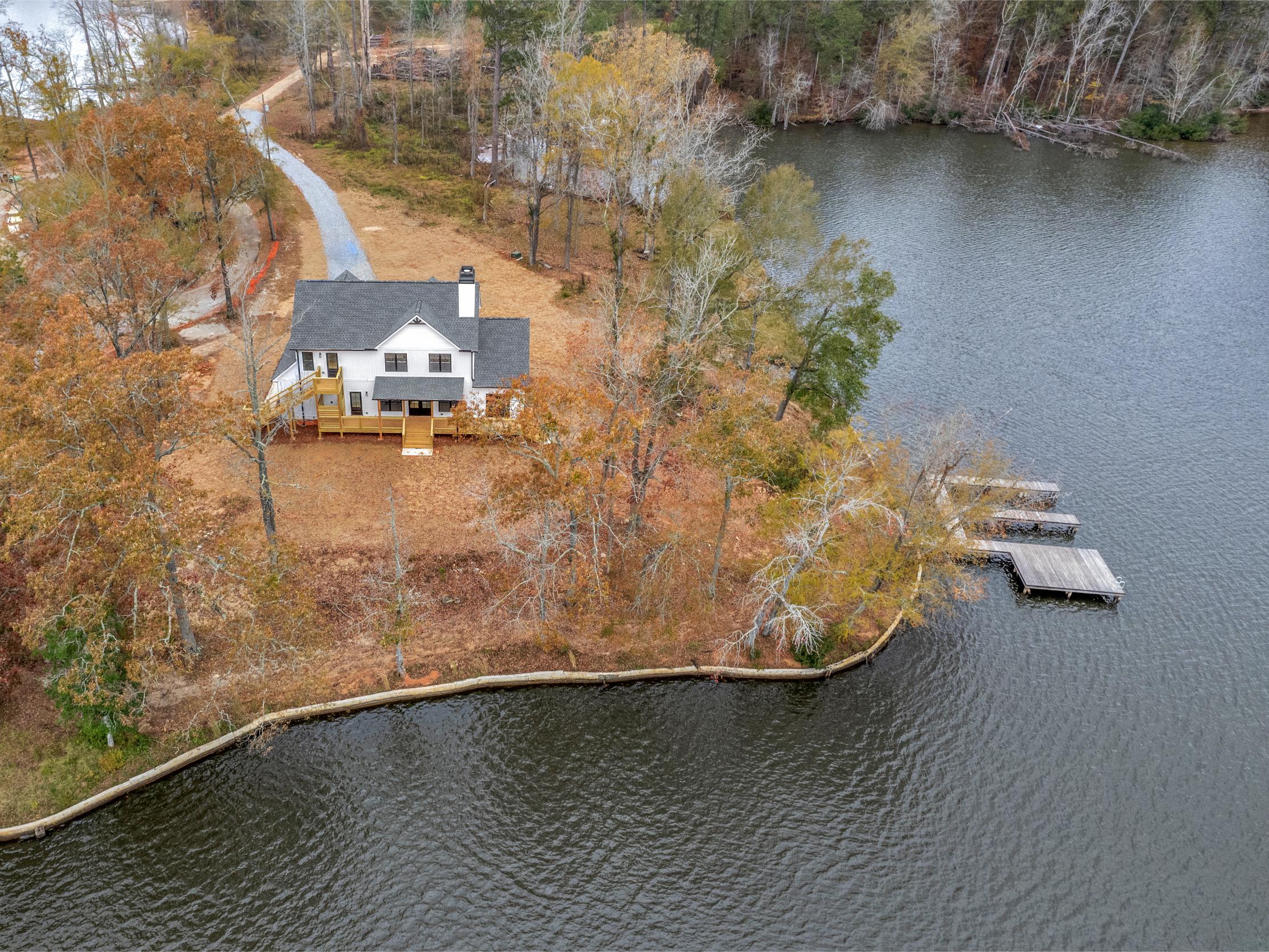
If your renovation budget is going to hit 50% or more of what a new build would cost on the same lot, you should seriously consider knocking down and starting over. That’s the short answer. The longer answer depends on your home’s structural condition, what you actually want the finished product to look like, and whether your current foundation can support the house you’re imagining.
J&J Custom Homes focuses on knock down rebuilds and new custom homes. This guide helps you compare those options against a major renovation before you commit to the wrong scope.
Here’s how to figure out which path makes sense for your situation.
The 50% Rule: Where Renovation Stops Making Financial Sense
This is the framework we use with every client who walks in undecided:
If your renovation will cost 50% to 60% or more of what a new home would cost on the same lot, knock down and rebuild.
Why? Because at that price point, you’re paying near-new-build money for a result that still has the compromises of the original structure: old framing, existing foundation limitations, outdated systems buried in walls you didn’t open, and a floor plan that was designed for someone else’s life.
Here’s what that looks like with real numbers in Central Georgia:
| Scenario | Major Renovation | Knock Down Rebuild |
|---|---|---|
| 2,400 sqft home, lot you already own | $280,000 to $380,000 (gut reno + addition) | $480,000 to $575,000 (new build at $200-$240/sqft, mid-range finishes; premium finishes increase both sides proportionally) |
| Reno as % of new build | 58% to 66% | 100% (baseline) |
| What you get | Updated version of existing structure, same bones | Brand new home designed exactly how you want it |
| Foundation | Original (possibly compromised) | New, engineered for your design |
| Energy efficiency | Improved in opened areas only | Current code throughout, 30-40% more efficient |
| Floor plan freedom | Limited by existing load-bearing walls | Unlimited |
| Timeline | 8 to 14 months (discovery delays common) | 10 to 14 months (predictable) |
| Warranty | Contractor warranty on new work only | Full builder warranty on entire home |
When renovation costs cross that 50% line, you’re not saving money. You’re spending almost the same amount for a lesser result.
When Renovation Is the Right Call
Renovation makes sense when the cost stays well below that threshold and the existing structure is fundamentally sound. Specifically:
Your home is a good renovation candidate if:
- The foundation is solid (no cracking, settling, or water intrusion)
- The framing is structurally sound (no termite damage, rot, or sagging)
- The floor plan mostly works and you’re making cosmetic or systems upgrades
- Your budget is under $150,000 to $200,000
- You’re updating finishes, replacing HVAC/plumbing/electrical, or doing a kitchen/bath remodel
- The home has character or historical value you want to preserve
- Zoning or setback restrictions would reduce your buildable footprint on a new build
The reality check: Most homeowners who start thinking "I’ll just renovate" end up in a gray zone where the project grows. What started as a $120,000 kitchen and bath remodel becomes a $280,000 gut renovation once the contractor opens walls and finds aluminum wiring, galvanized pipes, inadequate insulation, and a load-bearing wall where you wanted an open concept.
That scope creep is the #1 reason renovation budgets blow up. You can’t know what’s inside the walls until you open them.
When Knock Down Rebuild Is the Right Call
KDR makes sense when the structure itself is the limiting factor, not just the finishes. You should seriously consider tearing down and starting fresh if:
Structural indicators:
- Foundation problems (cracking, settling, water intrusion that can’t be resolved with drainage alone)
- Extensive termite or moisture damage to framing
- Original construction quality was poor (common in 1960s-1980s tract homes)
- The home doesn’t meet current building codes and bringing it to code would require opening every wall
Practical indicators:
- The floor plan doesn’t work and load-bearing walls prevent the layout you want
- You need significantly more space (adding 800+ sqft to an existing structure creates weird flow and uneven ceiling heights)
- The roof structure limits your options (low-pitch roofs, trusses that can’t be modified)
- Multiple systems need full replacement (HVAC, plumbing, electrical) simultaneously
- Renovation estimate exceeds 50% of new build cost
Financial indicators:
- Your lot is worth more than the home sitting on it (common in desirable Central Georgia locations)
- Post-renovation appraisal won’t support the investment (you’d be over-improved for the neighborhood)
- Energy costs are extreme and insulation can’t be retrofitted without gutting every wall
WANT AN INSTANT ONLINE ESTIMATE?
Find out what your project would cost in minutes.
Whether you’re leaning toward renovation or a full knock down rebuild, our online estimate tool gives you a realistic starting number based on your lot and scope.
Get Your Online Estimate →The Hidden Costs of "Just Renovating"
Renovation has costs that don’t appear in the initial estimate. After years of managing both renovations and new builds in Central Georgia, here’s what we consistently see:
Discovery Costs
You won’t know the full scope until demolition begins. Behind drywall, under floors, and above ceilings, you’ll find surprises. Every renovation has them. Budget an additional 15% to 25% for unknowns, because the estimate your contractor gave was based on what’s visible.
Living Through Construction
A major renovation typically means 8 to 14 months of living in a construction zone or paying for temporary housing. Dust, noise, no kitchen for 6 weeks, bathrooms offline, workers in your space daily. Rental costs during this period ($1,500 to $2,500/month in Central Georgia) add $12,000 to $35,000 that’s rarely included in the renovation budget.
A knock down rebuild has the same displacement, but the timeline is more predictable. You know from day one that you’ll need 10 to 14 months of alternative housing. No surprises.
Piecemeal vs. Holistic
Renovation is inherently piecemeal. You’re fixing what’s broken, updating what’s outdated, and working around what you’re keeping. The result is functional, but it’s a compromise. New wiring terminates at old panels. New plumbing connects to existing pipes. Fresh insulation sits next to 40-year-old batts in walls you didn’t open.
A new build is holistic. Every system is designed together, installed together, and warranted together. No weak links.
Scope Creep
This deserves its own mention because it kills more renovation budgets than any single line item. It works like this:
- You open a wall to run new plumbing.
- You see the framing has moisture damage.
- Now you’re replacing framing and sistering joists.
- While the wall is open, the electrician spots knob-and-tube wiring that needs replacing.
- Your $8,000 bathroom plumbing job is now a $22,000 structural and systems repair.
Multiply that across a whole-house renovation. It compounds.
ROI and Equity: Which Path Builds More Value?
This matters if you’re thinking about the financial outcome, not just the emotional one.
Major renovation ROI in Central Georgia (based on industry estimates; actual recoup varies by project, neighborhood, and market conditions):
- Typical recoup: 60% to 75% of renovation cost added to home value
- Risk: over-improving for the neighborhood (spending $350,000 to renovate a home on a street where the ceiling is $400,000)
- Limitation: appraiser still sees a 1985 home with updates, not a new home
Knock down rebuild ROI (same caveat: these are industry-informed estimates, not guarantees):
- Typical recoup: 80% to 100%+ of build cost reflected in appraised value
- Advantage: appraiser sees a brand new home. New construction comps apply, not renovation comps.
- Result: in neighborhoods where lot values are climbing, KDR often creates more equity than renovation because the finished product appraises as new construction
The neighborhoods where this matters most in Central Georgia: established areas in Jasper, Putnam, and Morgan counties where lot values have appreciated but the homes on them haven’t kept pace. A 1970s ranch on a $100,000 lot is worth less than a new custom home on that same lot, even if you pour $300,000 into the ranch.
The Decision Checklist
Answer these honestly. If you check 5 or more in the "KDR" column, renovation probably isn’t your best financial or practical path.
| Question | Points to Renovation | Points to KDR |
|---|---|---|
| Is the foundation in good condition? | Yes | No (cracking, settling, water) |
| Does the floor plan mostly work? | Yes, minor changes only | No, need major reconfiguration |
| What’s your budget relative to new build cost? | Under 40% | Over 50% |
| How many systems need replacement? | 1-2 (HVAC or plumbing) | 3+ (HVAC, plumbing, electrical, roof) |
| Do you need more than 500 sqft of additional space? | No | Yes |
| Is the roof structure limiting your options? | No | Yes |
| Are there code compliance issues throughout? | Minor, isolated | Widespread |
| Is your lot worth more than the current structure? | No | Yes |
| Do you plan to stay 10+ years? | No (5-7 years) | Yes (long-term home) |
| How important is energy efficiency? | Nice to have | Critical priority |
READY TO PRICE YOUR PROJECT?
Get a realistic starting range for a custom rebuild.
Our estimate tool takes a few minutes and gives you a starting budget range based on the custom home you want to build. No commitment required.
Get Your Online Estimate →How J&J Helps You Evaluate a Rebuild
J&J focuses on new custom homes and knock down rebuilds. Our fixed-price planning approach gives you a reliable new-build number to compare with renovation quotes from qualified renovation contractors:
- We assess your existing home and lot
- We discuss what you want the end result to be
- We price the new-build option using real subcontractor and material costs
- You decide with real numbers, not guesses
The detailed estimate process takes 4 to 6 weeks because we get real subcontractor pricing, not ballpark figures. You can then compare that reliable new-build number against renovation proposals and decide with confidence.
Frequently Asked Questions
Is it cheaper to renovate or knock down and rebuild in Georgia?
Renovation is almost always cheaper in total dollars. The question is whether it’s cheaper per unit of value received. A $300,000 renovation on a structurally compromised 1970s home gives you an updated old house. A $500,000 new build on the same lot gives you a brand new home with full warranty, modern efficiency, and your exact floor plan. The gap between those options narrows fast when renovation scope grows.
At what point should I stop renovating and tear down instead?
When renovation costs exceed 50% to 60% of what a new build would cost on the same lot. At that point, you’re paying near-new-build prices for a result that still carries the compromises of the original structure. The other trigger: when the structural condition of the home (foundation, framing, roof) makes renovation unpredictable.
Can I keep my lot and just rebuild?
Yes. This is exactly what a knock down rebuild is. You demolish the existing structure, keep your lot, and build a new home in its place. You keep your address, your neighborhood, your trees (where possible), and your lot’s location advantages. Demolition typically costs $15,000 to $35,000 depending on home size and site access.
How long does a knock down rebuild take compared to renovation?
KDR typically takes 10 to 14 months from demolition to move-in. Major renovation takes 8 to 14 months, but that timeline is less predictable because discovery delays (finding problems behind walls) can push it longer. In practice, many major renovations end up taking as long as a new build.
Will my property taxes go up if I rebuild?
Yes, likely. The county will reassess your property at the new home’s value. If you’re replacing a $180,000 home with a $500,000 home on the same lot, expect your tax assessment to reflect the new construction value. Budget for this in your ongoing costs. Georgia’s homestead exemption helps offset some of the increase.
Do I need special permits to demolish my home in Georgia?
Yes. You’ll need a demolition permit from your county, and in some cases a disconnection notice for utilities (power, water, gas, sewer/septic). In Jasper, Putnam, and Morgan counties, the demolition permit process is straightforward and typically takes 1 to 2 weeks. Georgia requires an asbestos inspection for all demolition projects, regardless of the home’s age. Separately, lead paint testing may be required for homes built before 1978.
Can I live in my home during a major renovation?
For cosmetic renovations (kitchen, bathrooms, flooring), sometimes. For a gut renovation involving structural work, systems replacement, or additions: not safely or comfortably. Plan for 4 to 12 months of alternative housing depending on scope.
Does J&J offer free assessments for this decision?
We offer a free initial consultation to discuss your situation. The detailed estimate (which includes real pricing for both renovation and rebuild options) requires our formal estimate process. Learn more about our estimate process and request yours here.
Ready to Find Out Whether You Should Renovate or Rebuild?
The fastest way to end the renovate-or-rebuild debate is to get real numbers for both options on your specific lot. That’s exactly what our estimate process delivers: hard pricing for renovation AND a new build, side by side, so you can compare with confidence.
Do not leave this decision to guesswork or contractor ballparks. Get your online estimate and find out where your project actually stands before committing to either path. We work with homeowners at every stage, including those who are still deciding.
The worst outcome is spending $300,000 on a renovation that should have been a rebuild. The second-worst is tearing down a home that only needed $80,000 in updates. Real numbers prevent both mistakes.
Our Blueprint to Keys Commitment means you get one price, locked in, covering everything from foundation to final walkthrough. No change orders, no surprises, no budget creep. We do the hard math upfront so you never have to wonder where your money went.
Ready to talk through your project? Start with an online estimate or book a consultation with our team.